

-1554.webp)
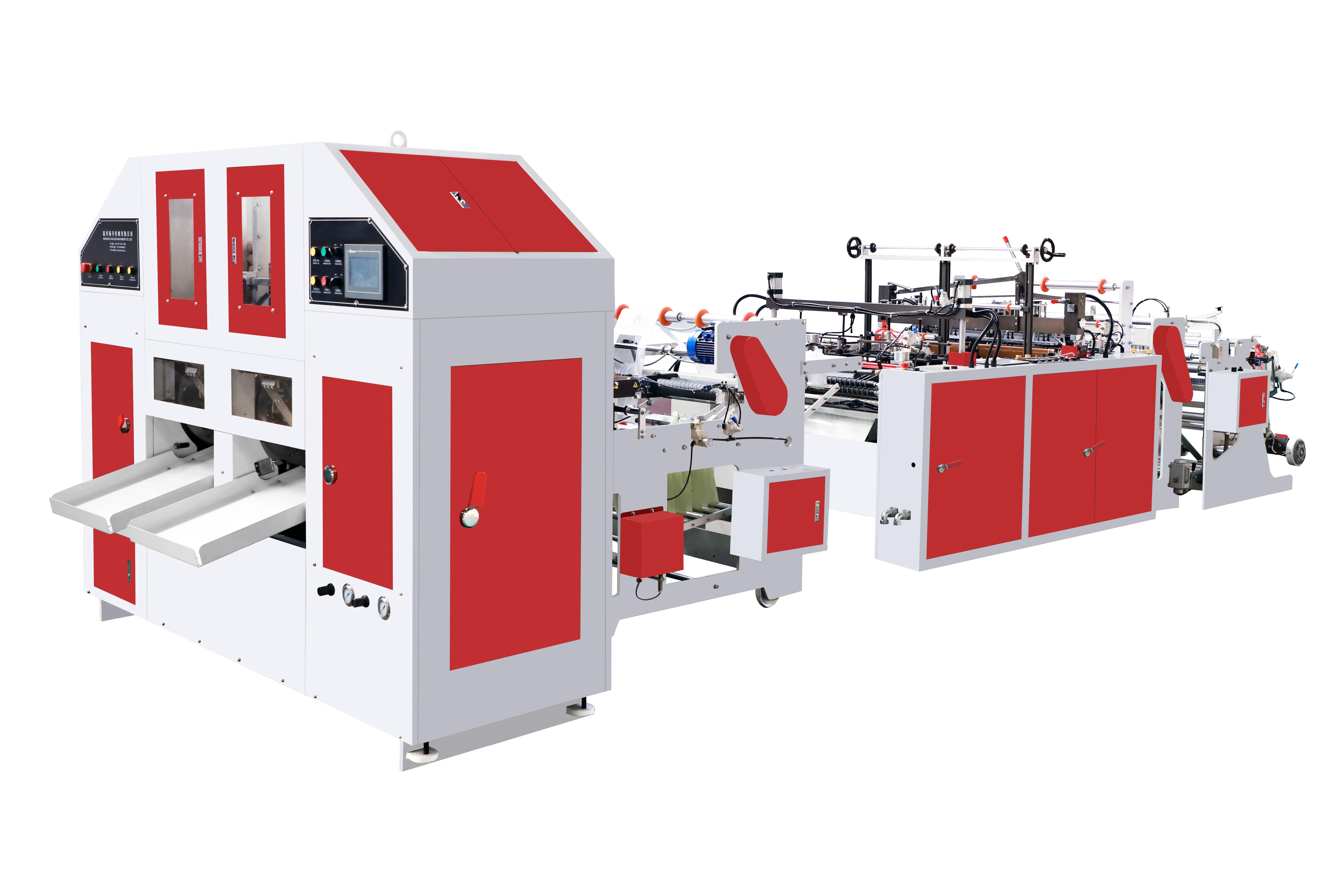
HSCS-1000WX
Fully Automatically Draw Tape Garbage Bag Making Machine
Selecting the right bag making machine is one of the most important decisions for any plastic bag manufacturer. The machine you choose will affect your production capacity, product quality, operating costs, and ability to adapt to changing market demands. With so many options available, how do you make the right choice?
This guide walks you through four key factors to consider.
Step 1: Identify Your Bag Type
The first question is simple: what kind of bags will you produce? Different bag types require different machine configurations.
- T-shirt bags – for supermarkets, retail stores, and food delivery. These machines typically include handle punching and sealing functions.
- Garbage bags – for household, commercial, or industrial waste. Bottom seal type (flat, star, V-fold, drawtape) is a key consideration.
- Flat bags – for food storage, courier bags, cup bags, and more. These may require cold cutting, multi-lane production, or specialty functions like glue dispensing.
- Heavy-duty bags – for industrial packaging, chemical sacks, and building materials. These require machines capable of handling thick film (20-150μm) and flying knife cutting.
Step 2: Determine Your Material
The material you plan to process affects machine compatibility and performance.
- HDPE – stiff, strong, commonly used for T-shirt bags and grocery bags
- LDPE – softer, more flexible, often used for food storage bags and heavy-duty bags
- Recycled materials – cost-effective but may require adjustments to temperature and tension settings
- Biodegradable films (PLA/PBAT) – require precise temperature control and compatible sealing systems
If you plan to produce biodegradable bags, make sure the machine is explicitly designed or adapted for these materials. HIGH SEA’s full range supports PLA/PBAT without modification.
Step 3: Assess Your Output Capacity
How many bags do you need to produce per day? This determines the number of lanes and the level of automation.
- Single lane – suitable for large bags or lower-volume production
- Dual lane – a good balance for medium-to-high volume
- Four lane (or more) – maximum output for high-volume, small-bag production
Consider not only current demand but also future growth. A machine with higher capacity may be more cost-effective in the long run.
Step 4: Decide on Automation Level
Automation affects labor costs, consistency, and ease of operation.
- Semi-automatic – lower initial investment, suitable for smaller operations or limited budgets
- Fully automatic – higher output, less manual intervention, better consistency
- Full servo – highest precision, energy efficiency, and flexibility; ideal for high-volume, high-quality production
Putting It All Together
Choosing the right bag making machine requires careful consideration of your bag type, material, output requirements, and automation needs. It’s also worth considering the supplier’s reputation, after-sales support, and ability to provide spare parts and technical assistance.
HIGH SEA offers a full range of bag making machines and free selection guidance to help you find the perfect fit. With 30 years of experience and customers in 70+ countries, we are ready to support your production goals.
Conclusion
Take the time to evaluate your needs and compare options. The right machine will not only meet your current production requirements but also position you for future growth.
SEO Keywords: how to choose bag making machine, bag making machine buying guide, T-shirt bag machine selection, garbage bag machine guide